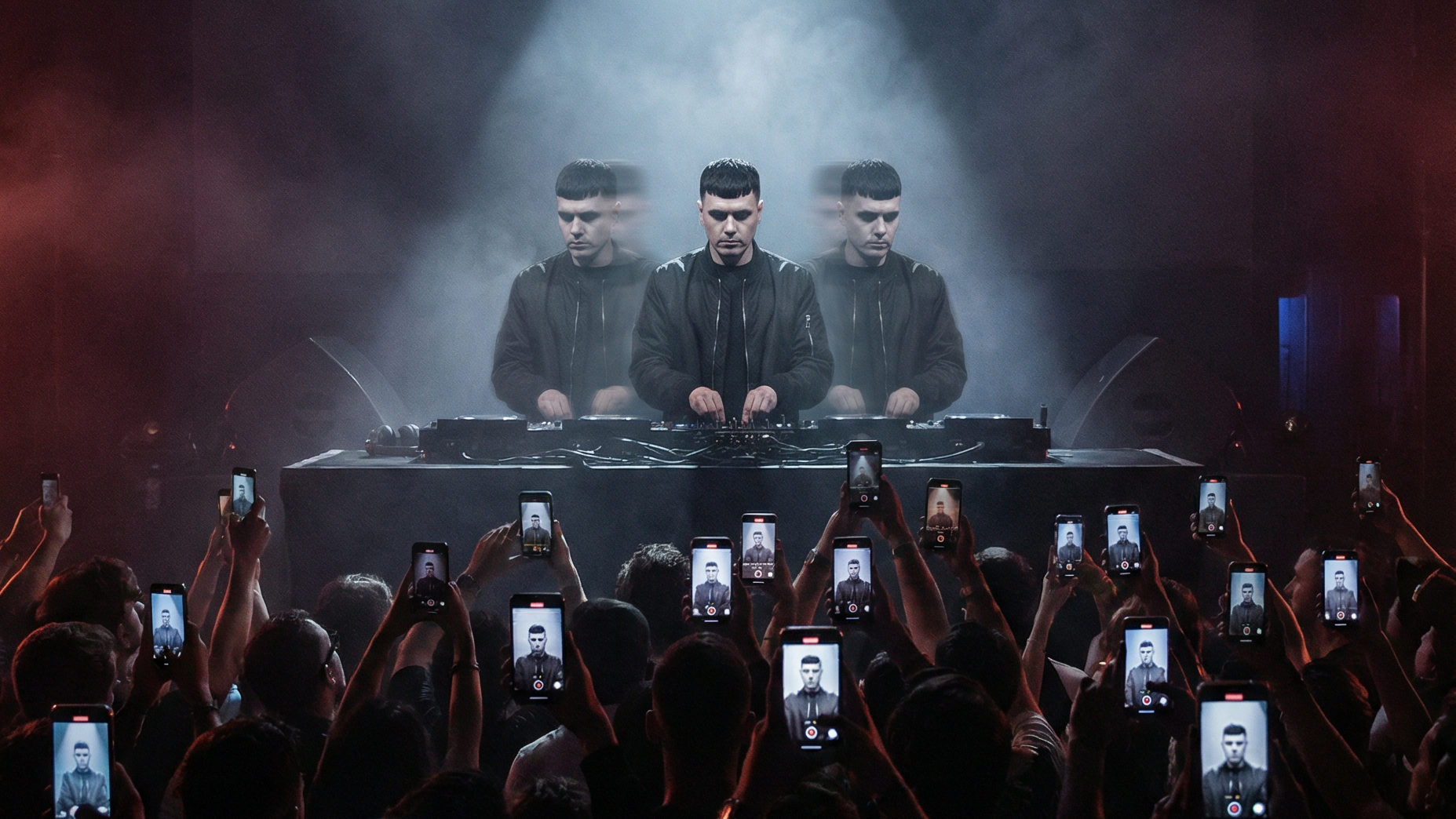



few debates in electronic music cut as deep as the question of pre-recorded sets. With festivals turning into multi-million-dollars productions and visuals needing perfect synchronization, many superstar DJs are accused of hitting play on a USB stick while lights, pyros, and LED walls do the heavy lifting. But does this practice not convey the culture of DJing—or is it simply the evolution of performance?
The Case Against: Losing the Human Touch
For veterans, DJing is about spontaneity. The DJ reads the room, reacts to the crowd, and shapes the journey track by track. When a set is pre-recorded, that dialogue disappears. It reduces the DJ from an active storyteller to a stage actor following a script.
Critics argue this strips away the authenticity that made dance culture special in the first place. “If I’m watching someone pretend to twist knobs while a finished mix plays, it feels fake.
The issue becomes sharper when fans spend hundreds on tickets only to realize the exact same set, transition for transition, was played in three different countries that month. For some, this undermines the raw, once-in-a-lifetime magic of the dancefloor.
The Defense: Artistry Beyond Mixing
On the flip side, artists and production teams defend pre-recorded elements as necessary in an era of large scale shows. Complex visuals, synced lasers, holograms, and live performers often require precise timing down to the millisecond. Without a locked-in audio backbone, the spectacle simply wouldn’t work.
“As a DJ you’re not just mixing tracks anymore. “You’re directing a movie in real time. To make the story seamless, certain parts need structure.”
Some artists also argue that pre-recording doesn’t automatically mean zero creativity. Hybrid sets—part live, part pre-programmed—still involve real-time tweaks, FX, and crowd interaction. It’s not a case of “press play and walk away,” but rather a merging of performance disciplines.
The Audience Divide
At the heart of the debate lies the audience itself. Clubbers expecting raw spontaneity might feel cheated, while festival-goers chasing a jaw-dropping audiovisual journey might not care how the music is delivered—as long as it hits.
There’s also a generational split. Older ravers who came up on vinyl culture often demand technical skill and improvisation. Younger crowds, raised on viral clips, sometimes prioritize the spectacle over the technicalities behind it.
A Question of Transparency
Perhaps the controversy isn’t about pre-recording itself, but about honesty. If a DJ markets themselves as delivering a unique set each night while secretly rolling out the same sequence, fans feel misled. If, however, an artist is upfront about presenting a choreographed audiovisual performance, the crowd may embrace it as a different art form altogether—closer to a live concert than a club set.
The Verdict?
Pre-recorded sets aren’t going away. The scale of modern festivals and the expectations of audiences virtually guarantee their presence. But the conversation reveals something vital: dance music still cares deeply about authentic connection. Whether through raw improvisation or carefully scripted spectacle, the challenge for artists is the same—make crowd feel something real.
In the end, maybe it’s not about how the music is delivered, but whether it still moves the dancefloor.