“Between Silence and Sound of DIM KELLY : The Journey Behind Beau Rivage” A Yalla Techno Interview
After two decades of making people dance, this artist decided to pause — to listen, to reflect, and to create from a place of quiet. The result? Beau Rivage — an album born in a wooden cabin outside Brussels, steeped in nature, emotional storytelling, and the freedom to go beyond the club.
In this exclusive Interview, we explore the personal and artistic evolution for DIM KELLY behind the album, the tension between introspection and dancefloor energy, and what it means to stay curious in a world obsessed with speed.
Congratulations on the release of Beau Rivage! Can you tell us what this album means to you personally and artistically?
Beau Rivage was born from my need for more freedom than singles or EPs usually allow. I love making club music and making people dance, but after 20 years of creating, I wanted to explore different sounds and tell a bigger story.
An album lets me step outside my usual style and show another side of myself without worrying about labels or categories. I’ve seen how the album is spread across different genres on streaming platforms, which makes sense to me.
For me, Beau Rivage is about making music that’s true to who I am. It might not be the easiest thing to promote, but it adds depth to my artistic journey and lets people discover parts of me they wouldn’t hear in singles
You created the album in a wooden cabin outside Brussels. How did that unique setting shape the sound and atmosphere of the record?
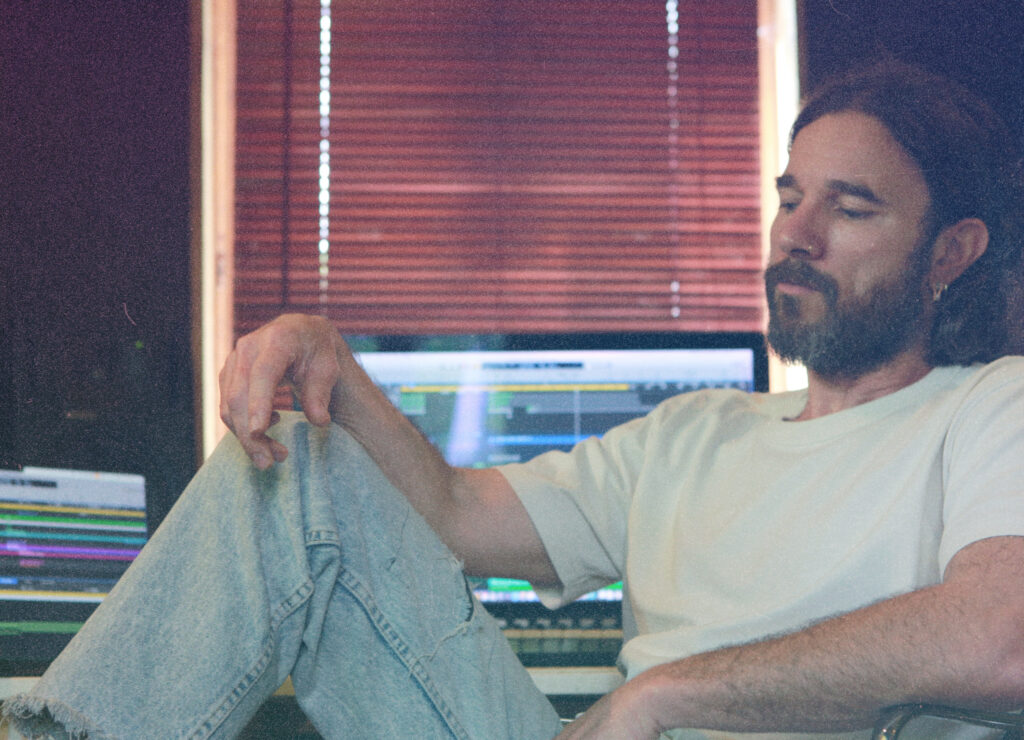
Working in that cabin always gives me a feeling of peace and freedom. It’s all wood, super warm, and when the sunlight comes in, I feel wrapped in a cocoon. The natural acoustics are quite special, and it pushes me towards more intimate and deeper ideas when I create.
I’ve moved around a lot and had many studios, and this one is just another chapter… a temporary one, because I know I’ll build a more professional space in the next few years. And there’s a good chance I’ll do it with Kid Creme.
For now, I’m in this little wooden bubble, and I love it. The isolation is perfect for diving deep into my music and simply enjoying being alone.
Nature seems to play a big role in this project. What’s your relationship with the natural world, and how does it inspire your music?
Absolutely. Nature has always touched me deeply and makes me feel truly connected. I also love the city, honestly, I enjoy a bit of everything but right now, nature gives me a sense of meaning I can’t find anywhere else.
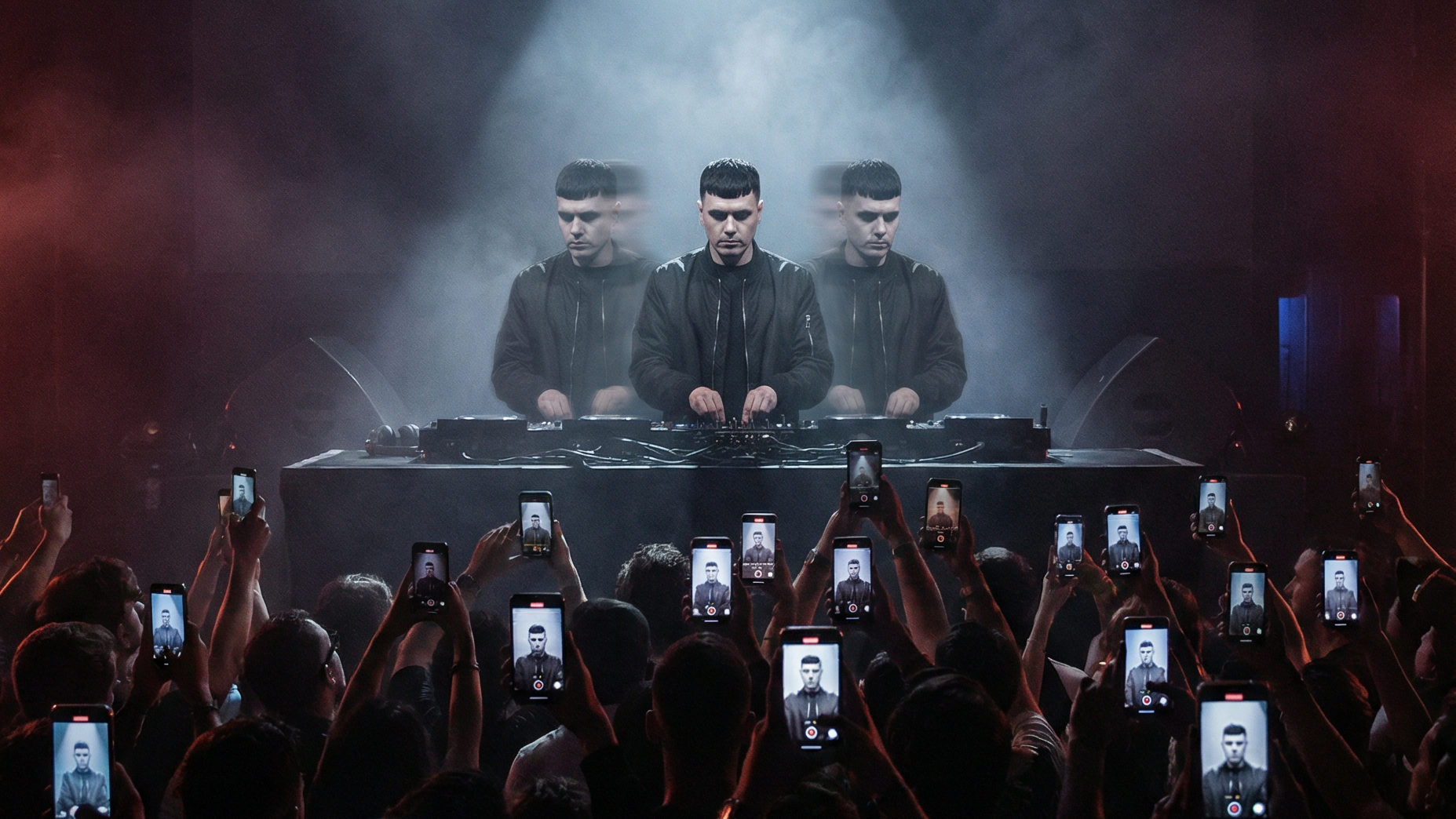
The DJ life is, of course, about sharing moments with people, bringing joy, and creating deep connections. But there’s also an ego side to it. You’re often in the spotlight, people glorify you, and that can feel incredible. But I’m also aware that part of it can be quite superficial.
Working with nature keeps me grounded in something simple and humble. It reminds me of what’s essential and gives me moments I can share with people I love who aren’t in the music world at all. I like this balance between the high-energy, DJ glamorous side of my life and the peace and simplicity I find in nature.
For me, nature is where I feel completely myself. It’s where I find calm, inspiration, and a connection to something bigger than all the lights and stages. Nature brings balance it’s the perfect counterpoint to the ecstatic, fast-paced life of the modern human in 2025
Screenshot
The album moves between introspective melodies and club-ready energy. Was that contrast intentional? How did you balance both sides?
That’s really what this album is about. It’s the reason I wanted to make one. I had more to express than just club music, and an album was the best format for that. It’s a part of who I am.
I also dream of one day creating music for film or working on projects outside the club world, because even though this album has a strong club direction, I have other stories to tell. For me, the album was the perfect way to share that other side of my music
You’ve released music consistently with All Day I Dream. What has your journey with the label and Lee Burridge meant for your growth as an artist?
I feel a special connection to All Day I Dream, mostly because of my relationship with Lee. He has a very human approach, both personally and in how he runs the label. For me, the human side of things is essential, not just in music but in life. Everything I do is driven by that. Any success I have, I want it to support projects with a human purpose.
Lee has always been incredibly supportive and respectful of my artistic choices. For this album, he gave me total freedom, and I really thank him for the trust he put in me.
That said, I’m also looking to explore other labels now, because I have tracks that don’t really fit the All Day I Dream sound. I kind of ended up in the Organic House scene by accident, and while it worked well with All Day I Dream at the time, not all my music falls into that genre. So it’s important for me to find the right homes for different sides of my sound.
I’ll definitely keep working with All Day I Dream because I love the label’s spirit, but exploring new spaces is part of my journey too
Let’s talk about the production side – what tools or instruments were essential in bringing Beau Rivage to life?
It’s pretty simple. I’ve got a master keyboard, Logic running on an iMac with some good plugins, and a pair of Genelec 1032s plus a sub to check what’s happening in the low end.
I built my studio myself, trying to get the best sound possible, even though I usually go mix my tracks in a bigger studio for more precision, especially for the low frequencies.
I also compose with my guitar, which is the instrument I play best. And that’s pretty much it.
There’s a sense of deep emotional storytelling in your work. Do you start with a narrative or let the music guide the story?
I don’t have one specific recipe. Sometimes it starts with chords that move me, sometimes with a melody in my head, or simply a particular emotion I’m feeling.
Autumn and winter are the seasons where I create the most emotional and sensitive music. There’s something melancholic in the cold, the falling leaves, and the shorter days that inspires me. I love lighting candles in my studio, creating a cosy vibe, and diving into that atmosphere.
I also listen to a lot of classical music during that time, which feeds into my inspiration. In summer, I’m more into club tracks or exploring other styles. But it’s definitely autumn and winter that push me to create deeper, more emotional pieces. There’s a certain magic in that period, with all the holidays and the special mood they bring.
Screenshot
Which track on the album was the most challenging to create – and why?
Honestly, they were all pretty challenging because I had tinnitus for almost a year. It started a bit over a year ago, and working with constant ringing in my ears was no fun. Thankfully, it’s much better now, and making music is enjoyable again.
As for the tracks themselves, Beau Rivage was definitely the toughest. I loved the original idea, but it took me a long time in to get it right. I think I made about 45 different versions. Some of those might even be better than the one I released… but I just couldn’t finish them.
It’s funny how some tracks come together in two hours and feel perfect, while others turn into an endless loop of versions until you lose all perspective. You have to keep refreshing your ears and try to work on the track like it’s day one — which is, let’s say, slightly exhausting. Beau Rivage definitely taught me that lesson
Can you share any personal memories or moments that made their way into the album, whether directly or indirectly?
If you listen to The Lure, you’ll hear a perfect example of personal moments and memories that found their way into the album.
From Nocturna Animal to Beau Rivage, how do you feel your sound has evolved over the years?
I’d say my sound has definitely become more club-oriented. I’ve always loved real house music and never wanted to stick myself in one box like “Organic House.”
When I started touring, it was mostly with All Day I Dream, playing earlier slots and keeping things smooth for whoever played after me. But now that I headline more, I play later and harder. Naturally, I want tracks in my sets that hit a bit more so my productions evolved too.
I still love Nocturnal Animal, but these days it’s tricky to fit it into my sets at 2 AM. My music’s hitting harder now and I’m loving it.
You’ve explored organic and melodic house deeply – how do you keep innovating within these genres?
I evolve and try new things because I don’t think in terms of genres. I just make music mostly club, because that’s my world. I’m not about to dive into techno, I know my limits, but I don’t put borders around my style. That freedom lets me experiment and, hopefully, keep creating something fresh.
What kind of experience do you hope listeners have when they hear Beau Rivage from start to finish?
It’s a bit like playing a DJ set. I love taking people on a journey, ideally to places they don’t expect, and maybe helping them discover sounds they didn’t even know they could love. That would be the ultimate goal for me, if I can give people that experience, it’s amazing
You’re part of a growing scene that values emotional depth in electronic music. Who or what continues to inspire you right now?
I listen to as many different genres as possible, especially music outside of what I produce. Because honestly, in electronic music these days, there’s a wave of repetition. A track drops, and suddenly three or four more appear sounding 90% the same, like some musical copy-paste epidemic.
Add tools like Splice, which is great in theory, but now thousands of producers pull from the same pool. Instead of composing, many just assemble tracks from Splice, and in three months you’ve got five songs using the exact same sounds. Not exactly my dream scenario.
So I try to compose as much as I can myself, write melodies, work with singers, and look for inspiration outside my genre. Otherwise, you end up making a sub-genre of a sub-genre, which isn’t where I want to go.
It’s definitely riskier to do your own thing. It’s much easier to ride the wave and make tracks perfectly in line with the current trend. Not doing that means taking the risk of dropping a track at the wrong moment or confusing people because it’s not “the sound of the day.” You’re more likely to face big flops.
But I believe that in the long run, it helps build a more interesting artistic profile. By not going down the route of following the trends, I hope that in five or ten years, people can still listen to my music.
Can we expect a live tour or performances based around this album? If so, how do you plan to translate its intimacy into a live setting?
At the moment, I don’t have plans for a live tour specifically around this album. Right now, I’m focusing on DJ sets and new productions. But in the future, I’d love to create a live show for a new project with real instruments and reimagined versions of my past tracks.
Finally, what message would you like to share with your fans and the Yalla Techno audience who are just discovering your sound?
Stay curious and keep an open mind. These days, we live in a world of fast consumption, where on platforms like Spotify, a track has ten seconds to catch your ear before you skip it. But that kind of listening can push us into narrower and narrower tastes, leaving less room for discovery.
Sometimes, it’s worth taking the time to really dive into music and learn how to appreciate it. That’s probably the best way to approach my album too. Even for me, the way I listen to music has changed, and I spend less time exploring new styles deeply. But I still believe it’s important.
If we want to preserve cultural diversity, we have to be willing to listen, to explore, and to give things a chance. It’s a bit like food, wine, beer, or even oysters — some things take a few tries to truly enjoy, but when you do, they open up a whole new world of sensations.
Music is the same. Taking the time to really listen keeps our minds open and helps us avoid getting stuck in the same formula over and over. And that’s how we keep our culture, and our musical world, rich and alive