
AI in Music Production: A Creative Revolution or a Creative Shortcut?
AI in music production is no longer a futuristic idea — it is actively shaping how tracks are created, refined, and imagined. From Suno to intelligent mastering plugins, algorithms are redefining electronic music workflows. If you’re curious about how AI in music production is changing the industry, you’ll find countless new tools and creative approaches emerging all the time. Interestingly, artificial intelligence is now deeply integrated in music production workflows.
The debate is intensifying: is AI empowering artists — or industrializing creativity? However, when thinking about AI transforming music production, both sides raise valid points.
The Rise of Generative AI Tools: Suno and Udio
Let’s start with Suno. In recent years, music production and AI innovation have become closely linked.
Suno can generate full tracks — vocals, lyrics, melodies, and structure — from a simple text prompt. Enter a mood, a genre, or a storyline, and within seconds you have a complete “song.”
For non-musicians, it feels revolutionary. For producers, it feels unsettling — not because it sounds perfect, but because it sounds good enough. This exemplifies AI’s growing influence in music production.
Not good enough to replace artists.
But good enough to blur the line.
Udio operates in a similar space, offering more control over structure and stylistic direction. These tools do not create artists — they generate outputs. The artist’s role remains critical, especially as AI in music creation becomes more prominent.
AI in Professional Studio Workflows
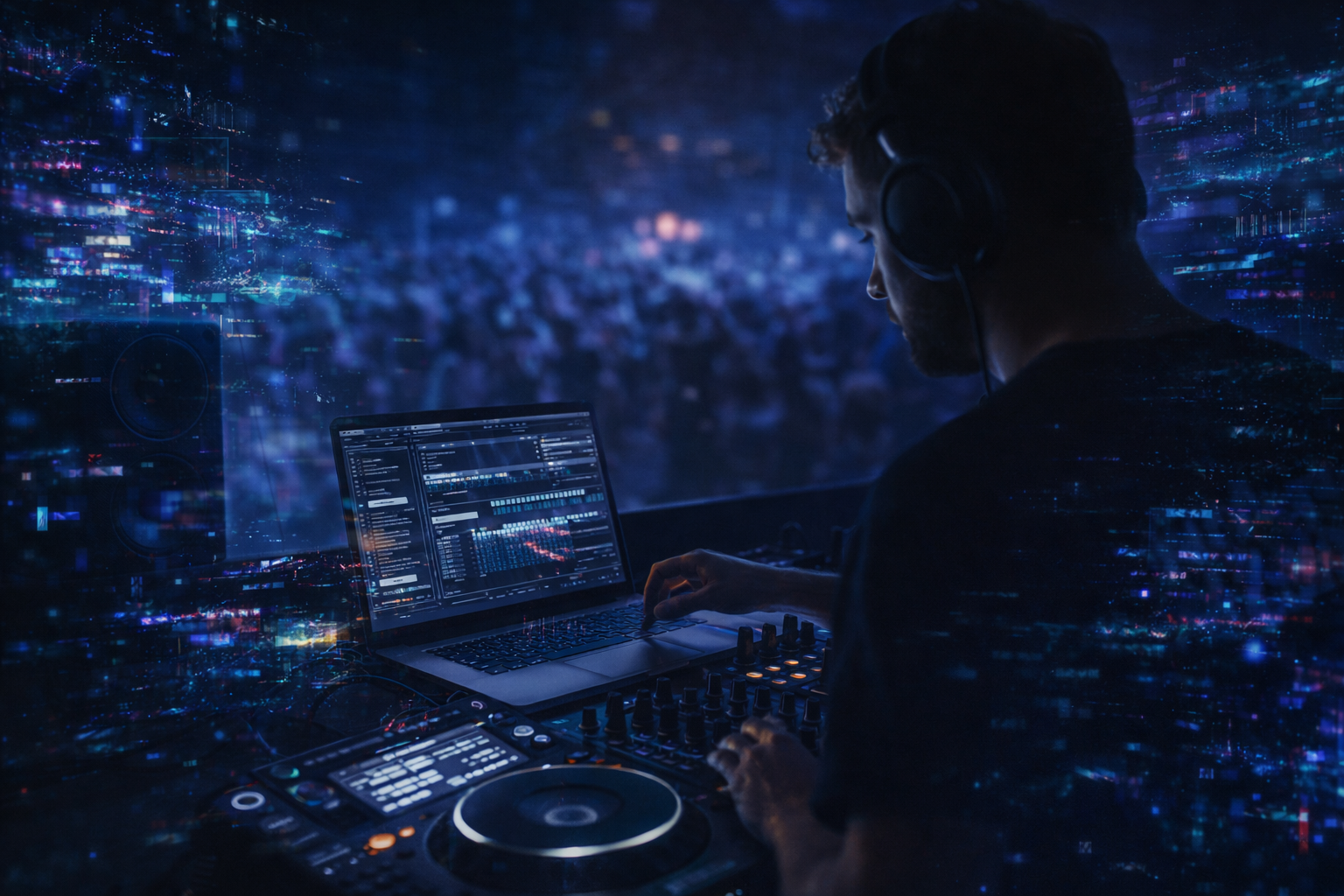
Beyond generative tools, artificial intelligence is already embedded in studio , marking a new chapter in music production influenced by tools
iZotope Ozone suggests mastering chains through machine analysis.
LANDR delivers instant mastering suitable for demos and independent releases.
RX repairs audio in minutes instead of hours.
These systems do not kill creativity.
They remove repetitive technical friction. When employing AI in music production, these improvements streamline technical aspects.
Composition-focused tools like AIVA generate harmonic structures and evolving textures, especially useful in cinematic or ambient projects. But AI remains a collaborator — not the decision-maker, even as it shapes music production today.
The Real Risk: Homogenization in Electronic Music
The real threat is not AI itself, but how music production could become standardized by such technology.
It is homogenization. As AI in music production expands, diverse sound could be threatened.
When producers rely on identical prompts, presets, and algorithm-shaped aesthetics, music begins to flatten. Dance music already faces formula-driven production optimized for algorithms rather than dancefloors. Thus, the creative limitations imposed by AI in music production warrant caution.
AI risks accelerating that trend if artists stop taking risks. The evolution of music production with AI is ongoing, but risk-taking remains essential.
The danger is not replacement.
The danger is shortcut culture. In essence, the rise of AI in music production might encourage shortcuts rather than true innovation.
Creativity, Identity, and the Human Factor
Creativity has never been about complexity.
It has always been about perspective, which is something music production with AI can never fully replicate.
AI does not understand your story.
It does not feel a broken club system at peak hour in Cairo, Berlin, or Tulum. Therefore, the personal connection in music production cannot be manufactured by AI.
Yalla Techno Outlook: Human With Machine
The future is not human versus machine; it is a hybrid creative model where technology supports artistic vision.
It is human with machine — using intelligent systems as studio tools rather than creative crutches, and remembering that emotion remains the most powerful plugin in music. Ultimately, the synergy between artists and advanced production technologies will shape tomorrow’s sonic landscape.