
For decades, electronic music — and techno in particular — thrived on patience. Today, however, we see more elements of a music culture driven by dopamine which shapes electronic genres. This reflects the rise of the economy in music where immediate rewards and rapid stimulation influence both production and listening habits.
Producers designed tracks to unfold slowly.
DJs built sets to evolve gradually.
Listeners stayed, immersed, and surrendered to time, reflecting a shift toward dopamine and music culture.
Today, that relationship has fundamentally changed as the music culture becomes more dopamine-driven.
Anyma Presents ADEN: A New Era Begins with Global World Tour
From Immersion to Instant Impact
In today’s digital ecosystem, speed dominates — and the shift toward a dopamine-driven music culture feels impossible to ignore.
Drops hit harder.
Payoffs arrive faster.
Moments are engineered for immediate reaction.
This approach works.
Streams climb.
Clips circulate at algorithmic speed.
MRAK Returns to Egypt – Ain El Sokhna at Palm Beach
How Social Media Reshaped the Sound
Social platforms have quietly rewritten the rules of music consumption, contributing to an increasingly dopamine driven music culture.
A track no longer needs to carry a dancefloor for six or seven minutes.
It only needs one powerful ten-second moment to satisfy dopamine driven music culture demands.
For algorithms — not for atmospheres, music culture driven by dopamine takes precedence.
The New Dancefloor Mentality
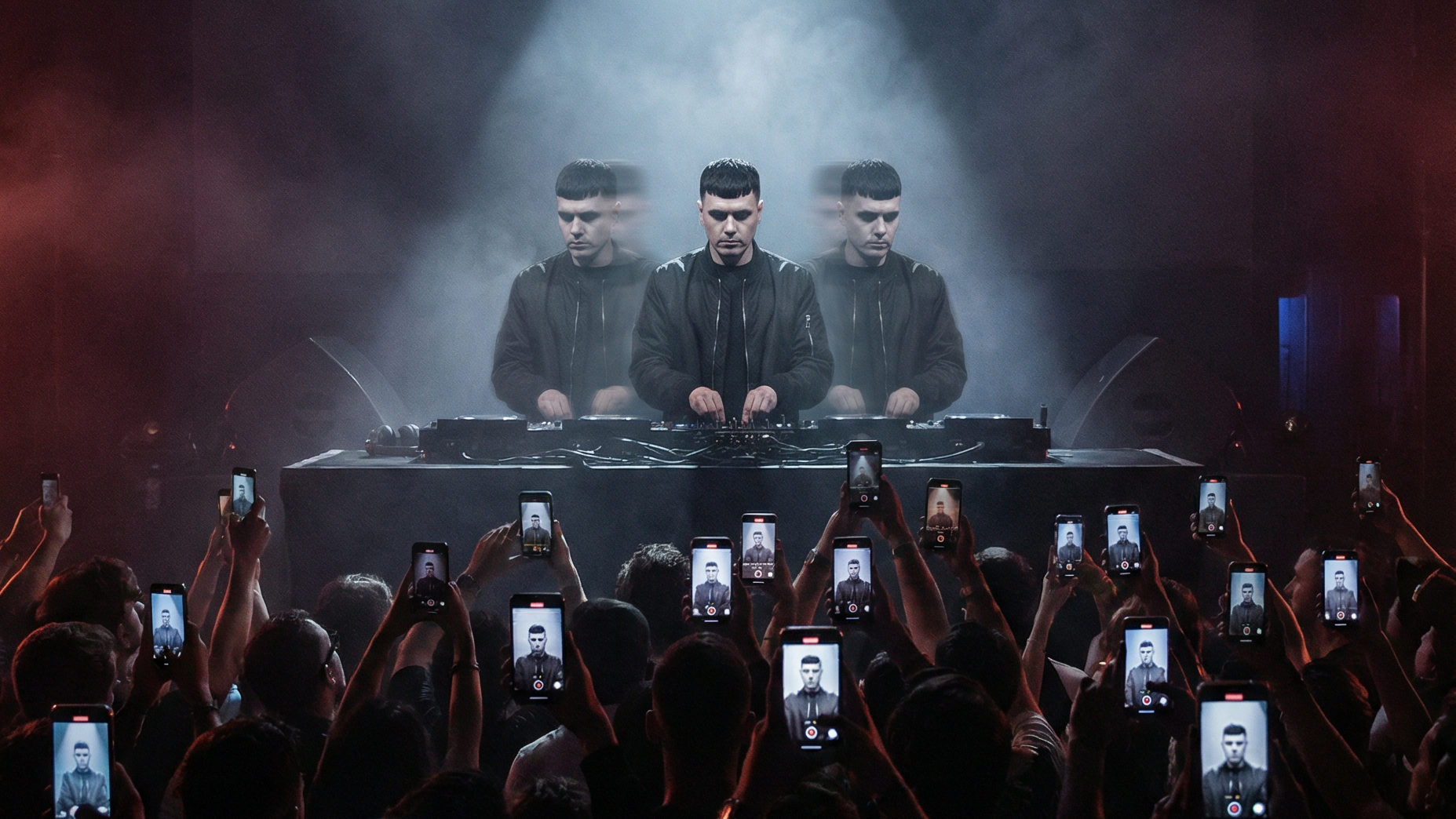
Phones appear.
Attention drifts.
Patience fades, a result of this dopamine driven approach in music culture.
Everyone waits for “the moment”—the kind defined by dopamine driven music culture.
The dancefloor becomes a content factory, reflecting the dopamine driven music culture.
When Intensity Becomes Formula in Modern Music
Too many sets today follow the same emotional structure under the impact of dopamine driven music culture:
Immediate lift →
Predictable breakdown →
Aggressive release →
Reset—patterns shaped by dopamine in music culture.
What was once raw and rebellious now feels optimized for dopamine driven music culture.
Safe.
Engineered.
Replaceable in this dopamine focused music climate.
The Disappearance of Emotional Depth
One of the biggest losses in this transformation is emotional range, sacrificed in favor of dopamine driven music culture.
Classic techno embraced:
Discomfort.
Repetition.
Suspension.
Silence—qualities that are less present in dopamine driven music culture.
These moments created hypnosis.
They gave the peak meaning — something many modern trends no longer attempt.
Today, anything that doesn’t stimulate instantly risks being dismissed as “low energy” or “wrong timing,” a hallmark of dopamine driven music culture.
Stillness has become a liability in a music culture driven by dopamine.
DJs Under Constant Pressure
Less space for experimentation.
>Less trust between DJ and crowd.
>Less freedom to fail — all symptoms of dopamine driven music culture.
Music becomes transactional, a perfect fit for dopamine driven music culture.
Deliver now — or disappear; this urgency is a result of dopamine driven music culture.
A Quiet Counter-Movement
DJs play longer sets.
Promoters curate intimate venues.
Certain spaces protect tension.
They give silence value.
These moments are rare — and that rarity gives them power in a landscape dominated by dopamine driven music culture.
Beyond the Highlight Reel
Music was never meant to be consumed like a highlight reel, yet dopamine driven music culture encourages just that.
It was built on time.
On repetition.
On transformation. The classic approach now wrestles with dopamine driven music culture.
In an era addicted to dopamine, choosing patience on the dancefloor may be the most radical act left—and a protest against dopamine driven music culture.
Yalla Techno will continue to document, question, and protect the deeper culture behind electronic music — beyond algorithms, beyond trends, and beyond shortcuts, even as dopamine driven music culture takes hold.