 By
By 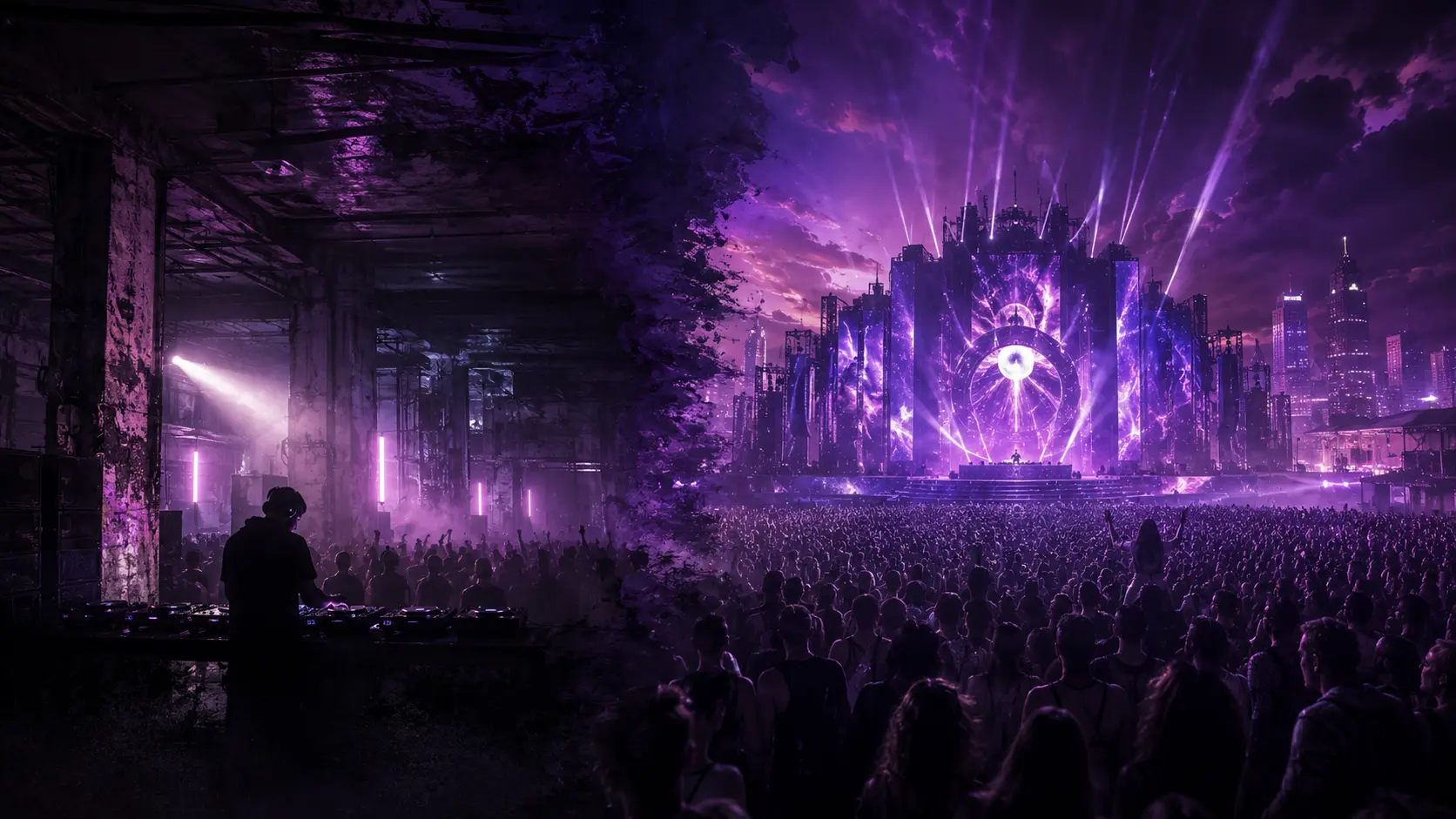
Techno was never meant to be background music.
It was built in dark rooms, warehouses, basements, and clubs where the focus was never about luxury tables, viral videos, or social status. It was about rhythm, repetition, pressure, tension, and release. For decades, techno carried the spirit of the underground: raw sound, minimal ego, and a strong connection between the DJ, the crowd, and the room.
But today, techno looks very different.
It lives on massive festival stages. It appears in viral Instagram clips. It fills arenas, sells out destination events, and often comes with huge LED screens, cinematic visuals, and full-scale brand experiences. The sound that once belonged mostly to underground spaces has become one of the most powerful forces in global electronic music.
So the question is simple:
Is techno still underground, or has it become the new mainstream?
Techno Was Built Away From the Mainstream
To understand where techno is today, you have to understand what made it powerful in the first place.
Techno was not built around celebrity culture. It was not created to chase radio play or easy hooks. Its strength came from repetition, machines, industrial energy, and the feeling of losing yourself inside a sound system.
The early spirit of techno was about escape. It gave people a place where identity, class, appearance, and social rules could disappear for a few hours. The dancefloor was the center. The DJ was important, but the room was bigger than the person behind the decks.
That is one of the biggest differences between techno’s roots and a lot of today’s electronic music culture.
The original idea was not: “Look at me.”
It was: “Get lost in the music.”
View this post on Instagram
The Festival Era Changed Everything
Over the last decade, techno has moved into much bigger spaces.
Festivals, open-air shows, stadium-scale productions, and destination events have changed the way people experience the genre. What was once mainly associated with dark clubs is now presented on huge stages with advanced lighting, visuals, lasers, and carefully built brand identities.
This shift helped techno reach new audiences. It made the genre more visible, more profitable, and more global. Artists who once belonged to niche club scenes are now headlining major festivals and selling thousands of tickets around the world.
But with that growth came a change in how the music is consumed.
For many new fans, techno is no longer discovered only through long club nights. It is discovered through short videos, dramatic drops, Instagram stories, TikTok clips, and viral festival moments.
That does not automatically make it bad.
But it does change the culture around it.
Melodic Techno Made the Sound More Accessible
One of the biggest reasons techno entered the wider mainstream is the rise of melodic techno.
Artists and projects connected to this sound made techno more emotional, cinematic, and easier for wider audiences to connect with. Instead of focusing only on raw rhythm and industrial pressure, melodic techno brought bigger breakdowns, emotional synth lines, vocals, and dramatic build-ups.
For many listeners, this became the gateway into techno.
Names like Anyma, Tale Of Us, Adriatique, Argy, Innellea, and others helped make this side of the genre more visible worldwide. Their music often works in both club spaces and large-scale visual shows, which made it perfect for the social media era.
The sound is powerful because it gives people something immediate to feel.
But this also created tension inside the scene.
Some people see melodic techno as a natural evolution. Others feel it softened the edge of techno and made it too polished, too predictable, or too focused on emotional drops rather than hypnotic movement.
Both opinions have a point.
Did Techno Lose Some of Its Edge?
This is where the debate gets interesting.
When a genre becomes bigger, it almost always loses part of its original mystery. More people enter the scene. More promoters use the word “techno” because it sells tickets. More artists adjust their sound to fit larger stages. More crowds come for the visual moment rather than the full musical journey.
That can create a problem.
Techno becomes a brand before it remains a sound.
The darker, stranger, more challenging side of the genre can get pushed aside in favor of safer drops, cleaner visuals, and more predictable festival formulas. In some cases, the word “techno” is now used for music that is closer to melodic house, progressive, or big-room festival music than actual techno.
But that does not mean real techno has disappeared.
It means the genre has split into different worlds.
There is the global, polished, festival-facing version of techno.
And there is still the deeper, rawer, underground version living in clubs, smaller rooms, late-night sets, and communities that care more about sound than image.
The problem is not that techno became popular.
The problem is when people forget where it came from.
Social Media Changed the Way People Hear Techno
Techno is not only being played differently. It is being watched differently.
Today, a lot of people experience electronic music through their phones before they experience it on a dancefloor. A 20-second clip can define how people judge a track, a DJ, or an entire event.
This has changed the pressure on artists and promoters.
A set now needs moments that look good online. A show needs visuals that can travel across Instagram. A drop needs to hit fast enough to survive inside a reel. The audience is not only listening — they are recording, posting, comparing, and reacting in real time.
Again, this is not always negative.
Social media helped electronic music reach people who may never have discovered it otherwise. It gave artists global exposure. It made scenes more connected.
But it also created a culture where the image of the night can sometimes become more important than the night itself.
And techno was never supposed to be only about image.
Egypt and the New Techno Audience
In Egypt, this conversation matters even more.
The electronic music audience has grown a lot, but the culture is still developing. Many people are entering the scene through big names, big events, viral clips, and visually impressive shows. That creates excitement, but it also creates confusion.
Some people say they love techno, but what they actually love is the atmosphere around it: the venue, the backstage, the status, the visuals, or the brand name on the flyer.
Others are genuinely discovering the sound and slowly building a deeper connection with the music.
That is why Egypt is at an interesting stage.
The market is not just asking which international DJ can sell tickets. It is asking a bigger question:
Are we building a real electronic music culture, or are we only importing the image of one?
For the scene to grow properly, both things need to exist: big events that attract new audiences, and smaller spaces that educate people, take risks, and give the music room to breathe.
Without that balance, techno becomes a costume.
With that balance, it becomes a scene.
Mainstream Does Not Always Mean Weak
It is easy to say that once something becomes mainstream, it loses its soul. But that is too simple.
Popularity is not the enemy. Bad taste is.
A genre can grow and still keep its identity. Artists can play bigger stages and still deliver serious music. Promoters can build beautiful productions without turning the night into empty decoration. New fans can enter the culture and still learn to respect it.
The real issue is intention.
Is the music leading the experience?
Or is the marketing leading the music?
That is the difference.
Techno becoming bigger is not the problem. The problem starts when the sound becomes secondary.
The Future of Techno Depends on Balance
Techno today exists in two realities.
One reality is global, visual, polished, and highly marketable. It brings the genre to huge audiences and keeps pushing electronic music into new spaces.
The other reality is still underground, still raw, still focused on the dancefloor, and still protected by people who care deeply about the sound.
The future of techno depends on whether these two worlds can exist without destroying each other.
The mainstream version can bring people in.
The underground version can teach them why the music matters.
That is the balance the scene needs.
Final Thought
Techno did not disappear from the underground. It expanded beyond it.
The sound became bigger, more visible, and more powerful than ever before. But with that growth comes responsibility — from artists, promoters, media platforms, and audiences.
Because techno is not just a genre you use to sell a night.
It is a culture, a history, and a feeling that only works when people respect the music behind the image.
So maybe the real question is not whether techno is still underground or mainstream.
The real question is:
Can techno become global without losing its soul?
Related reading: Techno Music Identity 2026 — How Techno Shapes Culture.