 By
By 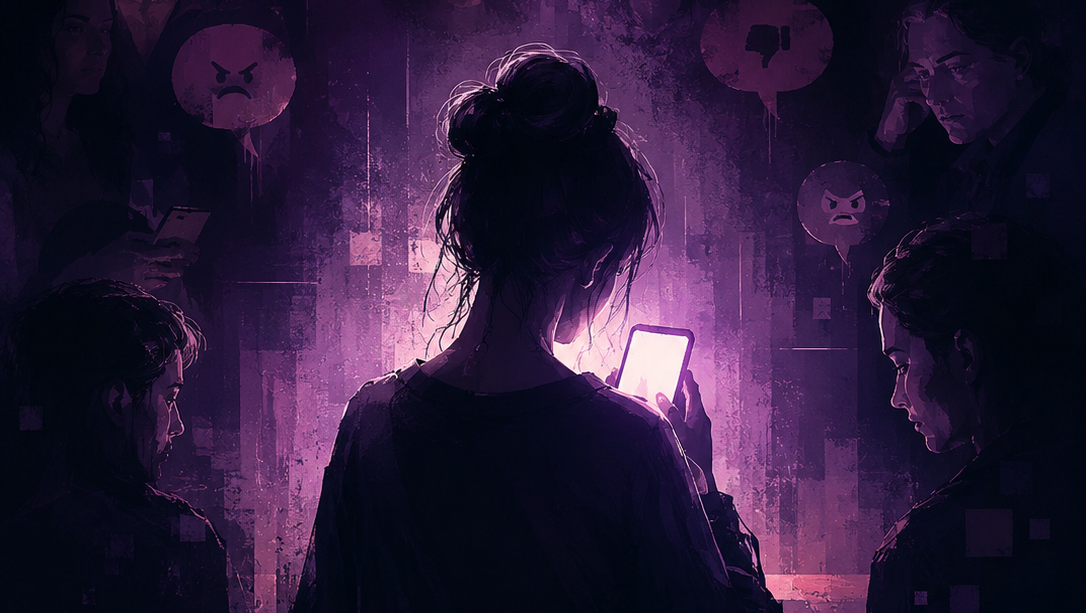
In the world of social media, a follow is easy to count, but not always easy to understand.
Many people assume that when someone follows a platform, artist, or music page, it automatically means support. But the reality is more complicated. Some people follow because they genuinely care. Some follow out of curiosity. Some follow to stay informed. And some follow simply to watch, judge, or react negatively to almost everything being said.
This is where an important question appears within the scene: is every negative comment real criticism, or is some of it just empty reaction?
Not every follow means support.
Not every disagreement means hate.
And not every negative comment deserves to shape the direction of a platform.
Visibility Brings Support, but It Also Brings Resistance
When any platform grows, the audience around it changes.
At the beginning, most followers are usually people who genuinely connect with the content. They are interested, supportive, and part of the core community. But as the platform becomes more visible, the audience becomes wider and more mixed.
You start attracting supporters, casual followers, critics, silent watchers, and people who may disagree with almost everything you post.
That is not unusual. Visibility does not only bring support. It also brings resistance.
Once a platform develops a clear voice, it stops being just a place that shares news. It becomes a platform with a point of view. And for some people, that alone is uncomfortable.
Opinions Disturb More Than News
News is usually safe.
A new track release, an upcoming event, a festival announcement, or a DJ lineup can pass without much conflict. People may like it, ignore it, or move on.
Opinion is different.
When a platform says a lineup did not meet expectations, questions the hype around a certain artist, highlights a weak part of the scene, or challenges a popular narrative, it is no longer just sharing information. It is opening a conversation.
And not everyone wants that conversation.
Some people treat a different opinion as a personal attack. If the opinion touches an artist they love, an event they attended, or a sound they strongly believe in, the reaction can quickly become defensive.
At that point, the discussion stops being about the idea and becomes about ego, taste, and identity.
Some People Reject Any Voice That Does Not Follow the Usual Script
Every scene has familiar names, familiar opinions, and familiar ways of speaking.
So when a platform starts asking uncomfortable questions, challenging common opinions, or refusing to praise the same things everyone else praises, it can become irritating to some people.
Not because the content is necessarily wrong.
Sometimes because the content is not convenient.
A healthy scene cannot survive on agreement only. It needs questions. It needs criticism. It needs space for different perspectives. It needs people who are willing to say that something was average, overhyped, underwhelming, or simply not good enough.
That does not mean every opinion will be correct. But without honest opinions, the conversation becomes flat.
Social Media Rewards Mockery More Than Understanding
One of the biggest problems with online discussion is that platforms often reward speed, sarcasm, and reaction more than depth.
A sarcastic comment can get more attention than a thoughtful one.
A quick insult can travel faster than a fair argument.
A dismissive sentence can feel more powerful than a real point.
Because of that, some people do not enter the comment section to discuss. They enter to perform.
They want to appear sharper, funnier, or more superior than the content itself. But performance is not criticism. Sarcasm alone is not an argument. And a comment that offers no idea, no question, and no real point is usually not adding anything meaningful.
It is just noise.
Real Criticism Has a Different Shape
Real criticism is not about blindly supporting a platform, artist, or audience. It is also not about attacking them.
Real criticism explains. It asks. It compares. It gives reasons. It can be firm, even uncomfortable, but it still has a point behind it.
There is a big difference between saying:
“I disagree with this opinion because…”
and saying something that only aims to mock, belittle, or dismiss.
The first one is criticism.
The second one is noise.
Criticism can improve a conversation. Noise only interrupts it.
Why the Scene Needs Calmer Debate
No music scene grows through praise alone.
But it also does not grow through constant negativity.
A real scene needs room for disagreement without disrespect. It needs people who can challenge opinions without turning every discussion into a personal fight. It needs criticism that pushes things forward, not comments that only try to shut things down.
Different opinions may feel uncomfortable, but they are important.
Criticism may feel unpleasant, but it can be necessary.
Disagreement, when done properly, can raise the level of the conversation.
The problem is not disagreement.
The problem is when disagreement becomes automatic hostility.
In the End, a Follow Is Not Enough to Understand Someone’s Intent
A follow does not always mean support.
A negative comment does not always mean hate.
And an aggressive comment does not always mean there is a serious opinion behind it.
The difference is in the intention and the way it is expressed.
Some people follow to learn.
Some follow to disagree.
Some follow to stay close.
Some follow only to watch.
That is part of social media. But the important thing is not to let every wave of negativity change your direction, weaken your voice, or make you afraid of having a clear opinion.
At Yalla Techno, we believe the scene needs clearer opinions, calmer debate, and smarter disagreement. Not because anyone has the full truth, but because any scene that wants to grow needs more than applause or attacks.
It needs conversation.
Related reading: The Lack of Originality in Electronic Music: A Critical Examination.