 By
By 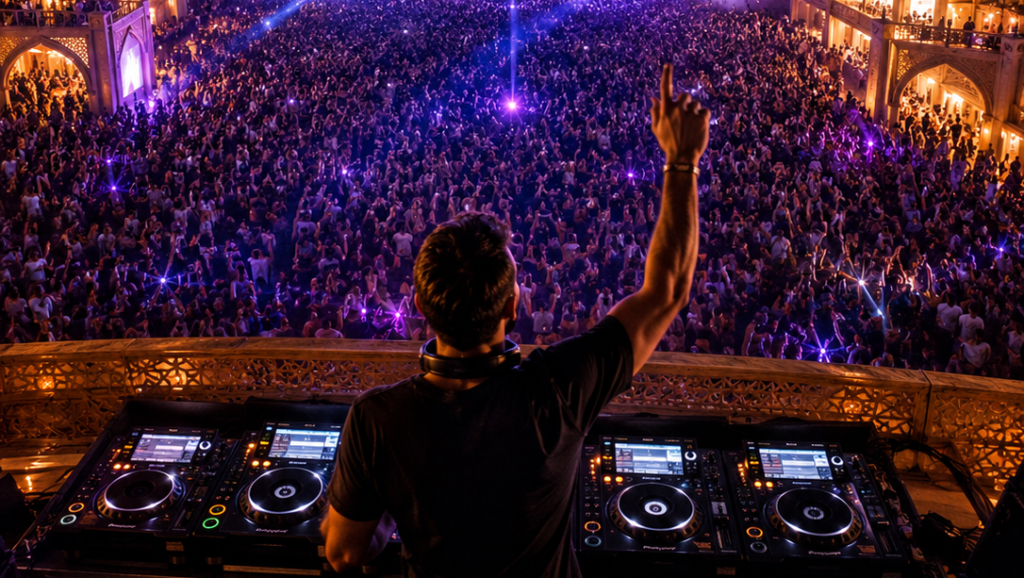
A decade ago, major electronic music tours were largely focused on Europe, North America and select parts of Asia. The Middle East was often viewed as a secondary market, receiving occasional festival appearances and one-off headline shows.
Today, the situation looks very different.
In 2026, the region has become one of the most strategically important destinations in global dance music. From Saudi Arabia’s rapidly expanding entertainment sector to Egypt’s growing festival culture and the UAE’s packed annual calendar, promoters and artists are investing in the Middle East at an unprecedented rate.
The shift is no longer about potential.
It’s about results.
The World’s Biggest Artists Keep Coming Back
One of the clearest indicators of the region’s growth is the frequency with which major electronic artists return.
Rather than appearing once every few years, acts such as Anyma, Adriatique, Black Coffee, CamelPhat, ARTBAT and Peggy Gou are now performing multiple Middle Eastern dates within the same touring cycle.
That consistency reflects strong ticket demand and an audience that has become increasingly knowledgeable about underground electronic music.
The region is no longer dependent on mainstream EDM bookings alone. Melodic techno, afro house, progressive house and underground tech house events are regularly attracting large crowds, demonstrating a level of market maturity that was far less common just a few years ago.
A New Generation of Clubbers
Part of the region’s success comes from demographics.
The Middle East is home to one of the world’s youngest populations, creating a natural audience for electronic music culture. Social media, streaming platforms and global festival content have made international dance music more accessible than ever before.
As a result, audiences are discovering artists through Boiler Room clips, SoundCloud uploads, TikTok edits and festival livestreams long before they arrive in their cities.
This has helped create crowds that are increasingly genre-aware.
Many attendees are no longer buying tickets solely because of a famous headline act. Instead, they’re following labels, collectives and specific sounds — whether that’s melodic techno, afro house, minimal or UK garage.
Beyond Importing Talent
Perhaps the most significant change is that the region is beginning to contribute its own identity to global electronic music.
Promoters are developing unique event concepts, local artists are receiving greater visibility and regional audiences are influencing booking trends.
The success of desert festivals, destination events and culturally distinctive venues has also given the Middle East something many established markets struggle to offer: originality.
While Europe still possesses decades of clubbing history, the Middle East has the advantage of building something new.
And as international artists continue prioritising the region within their touring schedules, its influence on the future of electronic music is likely to grow even further.
The question is no longer whether the Middle East belongs on the global dance music map.
The question is how much larger its role will become over the next decade.
Related reading: How Egypt Is Becoming a Global Destination for Electronic Music.