 By
By 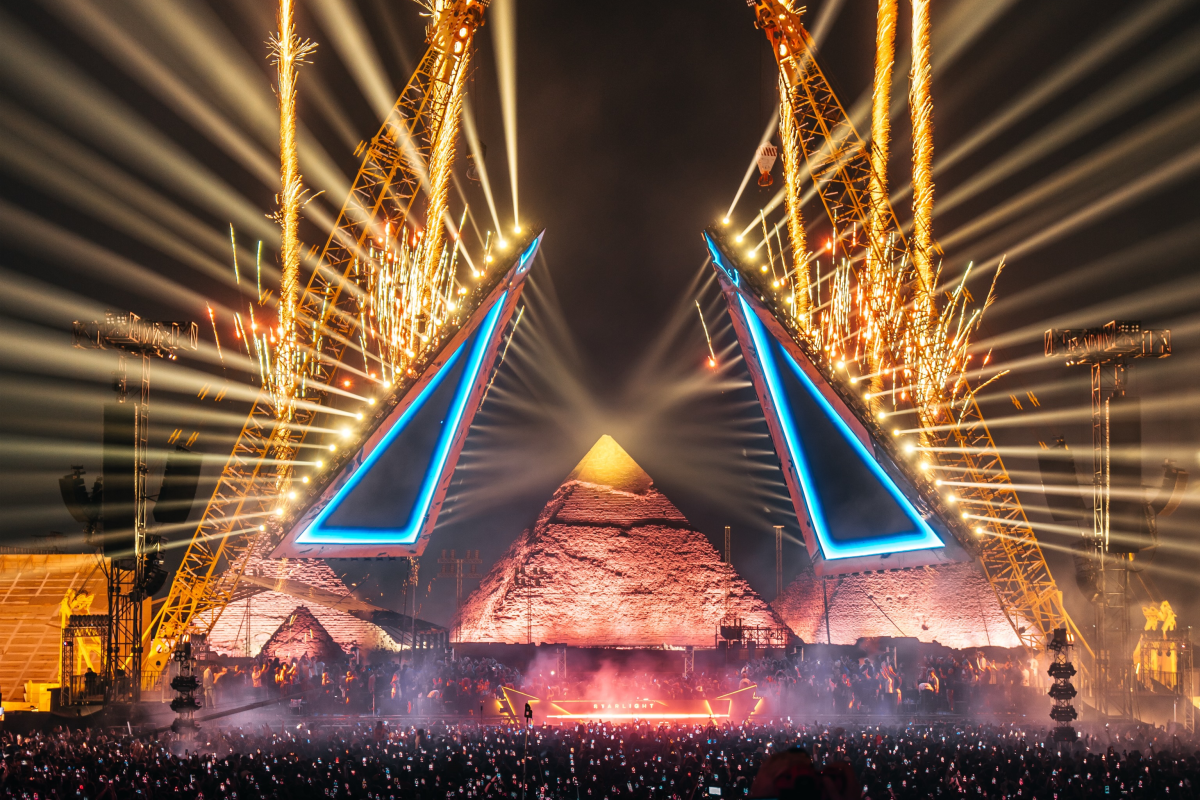
A Gathering Under the Stars
There are festival experiences defined by their lineups, others by their production, and a select few by the feeling they create when everything comes together. Starlight Festival brought those elements into focus beneath the stars of the Pyramids of Giza, gathering approximately 12,000 people for an event that marked a significant moment in Egypt’s electronic music landscape.
With international artists, diverse musical styles and multiple stages bringing different corners of electronic music culture together, the festival offered more than a succession of performances. For one night, the dancefloors became a shared space where thousands of people gathered around the same language: music. Against one of the world’s most recognisable historical backdrops, the atmosphere carried a particular significance, connecting Egypt’s ancient identity with the constantly evolving culture of electronic music.
Starlight Festival Countdown: What To Expect From Egypt’s New Pyramids Event
The result was a festival that felt like a sanctuary for music lovers, temporarily removed from everyday life and united by the energy unfolding across its stages. From house and melodic electronic music to driving techno and psytrance, Starlight offered a broad musical experience while giving its audience the freedom to discover sounds beyond their usual preferences
House Grooves, Hypnotic Journeys and Melodic Momentum
House music provided some of the festival’s most infectious moments, with Michael Bibi and Cloonee bringing distinct approaches to the dancefloor. Bibi’s groove-led sound and rolling basslines created the kind of momentum that has made him a recognisable name across international club culture, while Cloonee delivered a set rooted in punchy, contemporary house and club-focused selections. Both performances reflected the genre’s ability to connect a large audience through rhythm, groove and an instinctive understanding of dancefloor energy.
Adriatique approached the experience from a different direction, maintaining the momentum with their characteristic balance of melodic tension, atmosphere and driving rhythms. Their performance offered a more gradual, immersive progression, demonstrating how melodic electronic music can sustain intensity without relying exclusively on peak-time impact.
WhoMadeWho added another dimension through their distinctive combination of electronic production, live instrumentation and emotionally driven songwriting. Their sound brought a more organic quality to the programme, bridging the space between live performance and dance music.
Cloonee Reportedly Joins Starlight Festival Lineup in Egypt
Satori similarly explored the hypnotic side of electronic music, incorporating globally influenced textures and evolving rhythms into an immersive sonic journey. Together, these performances illustrated the breadth of Starlight’s programming, allowing house, melodic sounds and more experimental approaches to coexist within the same festival environment.
Three Different Dimensions of Electronic Music
Among the festival’s defining moments were the contrasting experiences offered by Charlotte de Witte, Enrico Sangiuliano and Indira Paganotto.
Charlotte de Witte delivered one of the event’s standout performances, opening what felt like a new portal beneath the stars of the Pyramids. Her uncompromising techno, driven by relentless rhythms and dark, hypnotic energy, found a striking setting in the ancient landscape. The contrast between the monumental structures behind the stage and the force of contemporary techno created a moment that extended beyond the music itself. It was a meeting of two worlds, with thousands of people immersed in the same experience.
Enrico Sangiuliano brought another shade of intensity, drawing on the powerful, industrial-leaning side of techno. His driving rhythms and carefully constructed arrangements introduced the atmosphere of warehouse culture to a setting defined by open skies and ancient architecture. The result highlighted the range of techno on offer, moving beyond a single interpretation of the genre.
Indira Paganotto’s ARTCORE stage takeover introduced a further dimension through its fusion of techno and psytrance influences. The psychedelic aesthetic, relentless momentum and distinctive sound offered a different experience from the festival’s house and melodic stages. For audiences encountering this combination on such a prominent platform in Egypt, the performance represented an opportunity to explore a less familiar corner of electronic music.
Together, these artists helped demonstrate the diversity of the festival’s musical identity, with each performance contributing a different perspective rather than competing for the same space.
The Stages, the Local Scene and the Wider Lineup
Beyond the international headliners, the festival’s wider programme played an important role in shaping the experience. The different stages gave audiences the opportunity to move between musical directions, creating a sense of discovery throughout the event rather than concentrating the entire experience around a handful of names.
The local artists were an essential part of that picture. Egypt’s electronic music community has developed its own identity through clubs, independent promoters, local collectives and DJs who have spent years building audiences and contributing to the country’s nightlife culture. Giving local talent a place within a festival of this scale connected the international programme to the scene that helped make such an event possible in the first place.
Across the stages, the variety of performances reinforced the idea that electronic music does not belong to one sound, one audience or one particular setting. Different styles and approaches found their place within the wider programme, while the atmosphere carried from one stage to another.
It was this combination of international names, local talent and musical diversity that gave Starlight its broader character. The festival was not simply a collection of headline performances; it was an opportunity to experience multiple sides of electronic music within a single gathering.
12,000 People, One Shared Experience
Ultimately, the crowd was central to what made Starlight memorable. Approximately 20,000 people gathered beneath the stars of the Pyramids, bringing different backgrounds and musical preferences into one shared environment. The energy on the dancefloors, the anticipation between performances and the collective response to the music gave the event an atmosphere that could not be created by production alone.
For a few hours, the festival became a sanctuary: a place where the outside world receded and the music took over. The Pyramids provided an extraordinary backdrop, but it was the people gathered beneath them who gave the setting its energy.
Starlight’s first edition also represented a wider milestone for Egypt’s festival culture. Its scale and musical range demonstrated the potential for the country to host ambitious electronic music experiences while continuing to develop its own identity within the regional scene.
Whether the event becomes a lasting fixture will depend on what follows, from future programming to consistency and continued support for local talent. But its opening chapter has already created a shared reference point for the people who were there.
Twenty thousand people, multiple stages and a spectrum of electronic sounds came together beneath one of the world’s most recognisable skylines. For one night, the Pyramids stood not only as monuments to the past, but as the backdrop to a living, evolving music culture—and Starlight became a reminder of what can happen when a crowd gathers as one.