 By
By 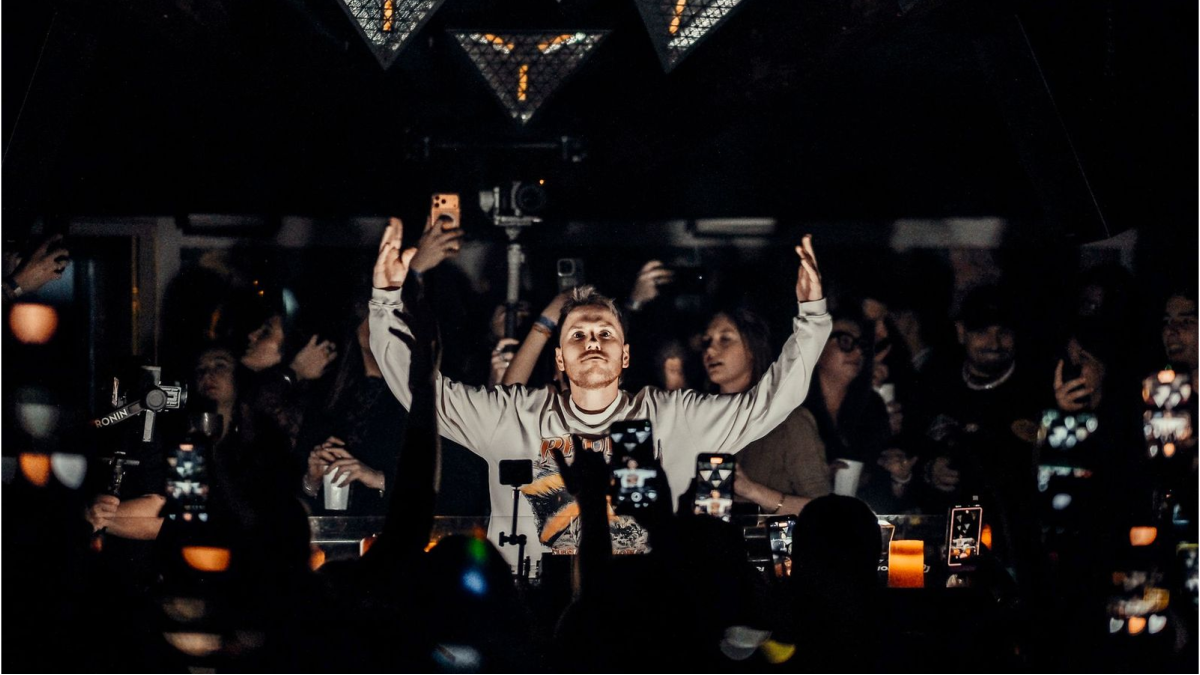
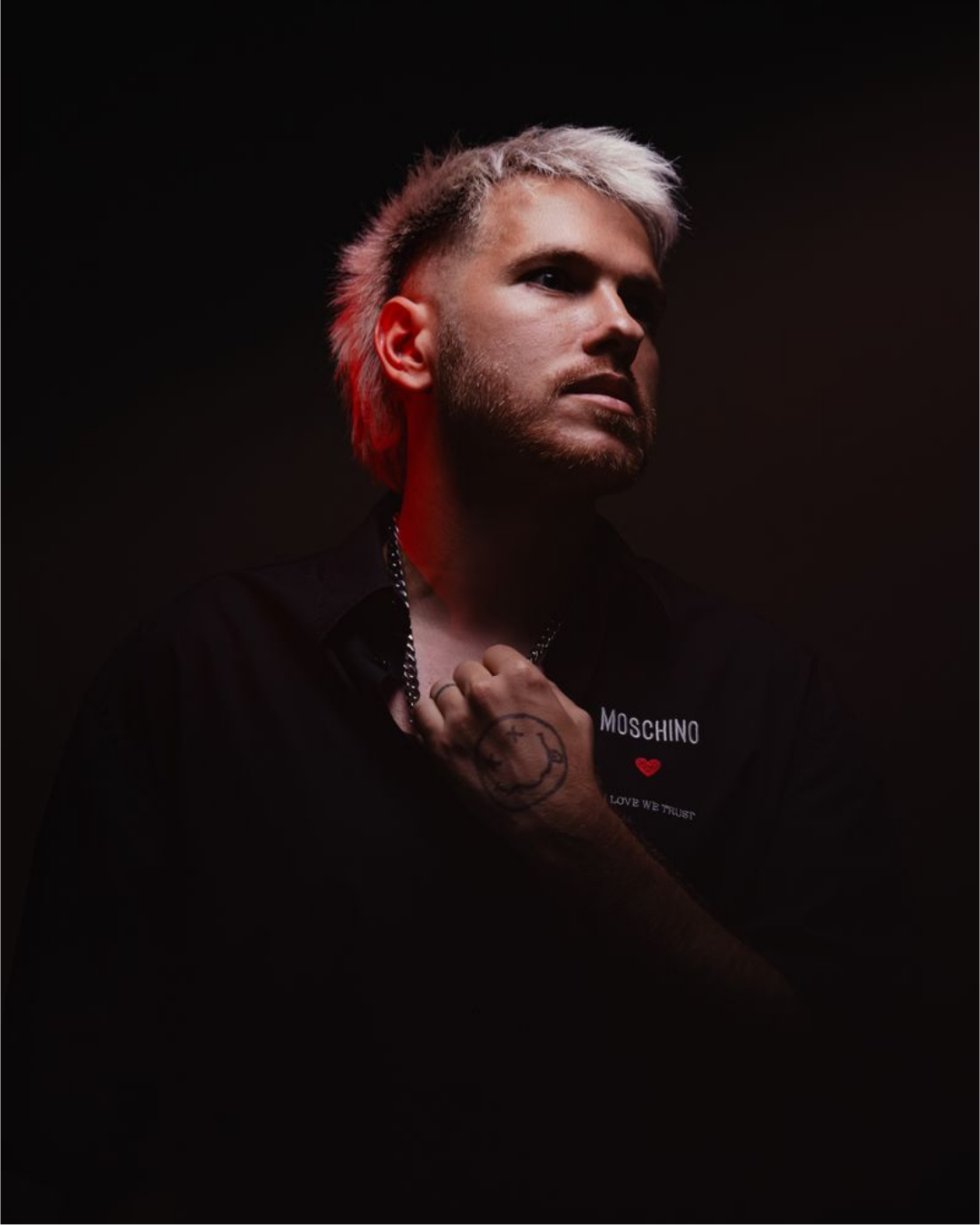
From a project launched only in summer 2025 to a breakout success in a matter of months, French DJ and producer SOLTO has quickly established his name in the Afro House and House space. Moreover, his debut collaboration with HUGEL, “Jamaican (Bam Bam),” reached No. 1 on Beatport’s Afro House chart. It then went on to generate hundreds of millions of streams.
Now, following the release of “How Far (Chalé)” with Bellil Brothers via Cr2 Records, Yalla Techno caught up with SOLTO to discuss his rapid rise, the mindset behind his music, resisting the pressure to repeat a hit, and where he wants to take the project next.
You launched SOLTO in summer 2025, but you had already spent years DJing and producing. What finally clicked that made this project feel like the right expression of who you are?
I think the big turning point was really a radical change in my mindset.
I had a few different projects in the past, in other styles, and in summer 2025, I decided to stop thinking about labels, stop thinking about other DJs, and just make music for people. I wanted to make music for clubs.
I had been a resident DJ for more than 15 years, so every weekend I was playing in front of hundreds of people. And I realized that I wanted to make music based on that experience — music that people can really feel and enjoy in a club.
So I decided to stop thinking about labels or anything else. Instead, I just make music for the people.
What is one creative decision in your music that felt risky at the time but ultimately helped define SOLTO’s sound?
I would say the biggest risk was deciding to make only the music that I really love. I did this without thinking about which DJ might play it or which label might like it.
I just wanted to be able to listen to a track and think, “This music really makes me feel something.” And I believe that if it makes me feel something, it should make other people somewhere in the world feel something too.
For me, that was the biggest risk, because I had to let go of my old habits — always thinking first about pleasing DJs, labels, and other people.
View this post on Instagram
When your debut becomes a breakout hit, it can also create expectations. Have you caught yourself making something because it might repeat that success — and what did you do next?
Yes, to be completely honest, in the months after Bam Bam came out, I was constantly trying to make another track that could be as strong as that one.
But after a few months, once I had had time to really take in the success of Bam Bam, I started thinking that I needed to find the same energy I had when I made that track.
That meant not thinking about DJs, not thinking about labels, not thinking about success or anything else. Instead, I focused on just making the music that really moves me and the music that speaks to me. I wanted to make the music that I would dream of listening to at home or in my car.
I think that was the moment I realized I had to go back to that mindset.
With your upcoming single “Chalé,” what did you want to explore that listeners haven’t heard from SOLTO before, and how did that idea take shape in the studio?
I think Chalé is quite different, mainly because of the originality of the vocal and the overall atmosphere of the track.
But at the same time, you can still hear my style in it — something very warm, very organic, with that feeling of a live track.
When Bellil Brothers sent me the first idea with the vocal, I immediately connected with it. I felt that the vibe could fit perfectly with my style.
So I added some of my signature sounds, and that’s when the magic started to happen.
I think the result makes this track really different from a lot of other tracks out there.
View this post on Instagram
Your music brings together different rhythmic and cultural influences. How do you explore the history behind the sounds you use, and how does that research shape the finished track?
I actually listen to very little electronic music. I listen to a lot of reggae, Latin music, and more organic, live music.
I love watching and listening to live performances because I feel that’s where the connection with the audience is the strongest. So I take a lot of inspiration from that.
As for how my research and my musical tastes influence my music, I don’t really know how to explain it. However, I think I just follow my instinct and follow what makes me feel something.
And like I said before, if it makes me feel something, I believe it will make other people somewhere in the world feel something too.
If we removed the vocals and the obvious hooks from your productions, what would you want us to recognise as distinctly SOLTO?
That’s an easy one. I would say the very organic, very live feeling.
I love the warmth you get from live music, and I love adding little elements in the background of my tracks that create that feeling. That kind of live energy always draws me in.
I really love that feeling. Whenever I can bring it into my music, I do it without hesitation.
For me, that warmth is a really important part of the SOLTO sound.
Do you think the commercial growth of Afro House is opening space for more adventurous music, or encouraging producers to repeat a successful formula? Where do you position yourself in that conversation?
I’m not sure that repeating formulas that already work is a good thing.
For example, Jamaican (Bam Bam) was copied in many different ways. But honestly, none of those versions really worked.
I think you really have to follow your instinct and follow what makes you feel something. Most importantly, don’t copy what is already being done.
Because maybe, by following your instinct, you can actually create the sound of tomorrow.
I think that’s the hardest part of being an artist: trusting yourself. Even if you’re not successful, even if things don’t work, you have to keep going. You really have to believe in what you feel inside.
For me, that’s what being an artist is about.
Can you describe a moment when a crowd reacted to one of your tracks differently from how you expected — and how that changed the way you produced or played it?
I don’t know if there’s one particular moment that really stands out to me.
Obviously, when I play Bam Bam, something very special happens with the crowd. But I think what really changed things for me was my 15 years as a resident DJ.
Playing in front of hundreds of people every weekend gave me confidence and made me think, “Okay, if you can make hundreds of people dance every weekend, use that experience to bring something new.”
You can make people in their 20s, their 30s, their 50s dance, whatever their musical background or where they come from.
So I told myself, “Use that. Trust yourself and put that energy into the music you create.”
And I think that mindset really changed the way I produce and the way I play my tracks.
For our audience in Egypt, is there an Egyptian or regional artist you would genuinely like to exchange ideas with? What would you be curious to learn from that collaboration?
Honestly, I don’t know that many Egyptian artists or artists from the region.
Of course, I know Ali & Fila, who are legendary trance artists. But generally, I think some of the biggest inspirations can come from local artists who are not well known yet — people making music at home, making music that really means something to them, but who maybe don’t have the confidence yet to share it with a bigger audience.
I think there are often incredible artists who, because of a lack of confidence, don’t dare to show their talent.
But of course, I love the culture. I love all cultures, and I love being inspired by them. So why not collaborate with an Egyptian artist? I’m completely open to it.
If people have demos, whatever the style, I’m always happy to listen. As long as I find something that makes me feel something, I’d be very happy to collaborate.
What creative risk would you like to take next, even if it surprises the people who discovered you through “Jamaican (Bam Bam)”?
I would say the next creative risk is simply making the music that I really love, without thinking about Bam Bam.
Bam Bam is part of my story, and I would even say it’s a big part of my story. But I also want to show people other sides of SOLTO.
Maybe with more underground tracks, like Amor, which came out in August. It’s a track I really love, and it has a very tribal feeling.
But I also have a lot of other things coming — some more indie dance, some more commercial, some less commercial.
At the end of the day, I just want to make the music that speaks to me, the music I really enjoy, and the music that fits perfectly with the story I want to tell through my sets.