 By
By 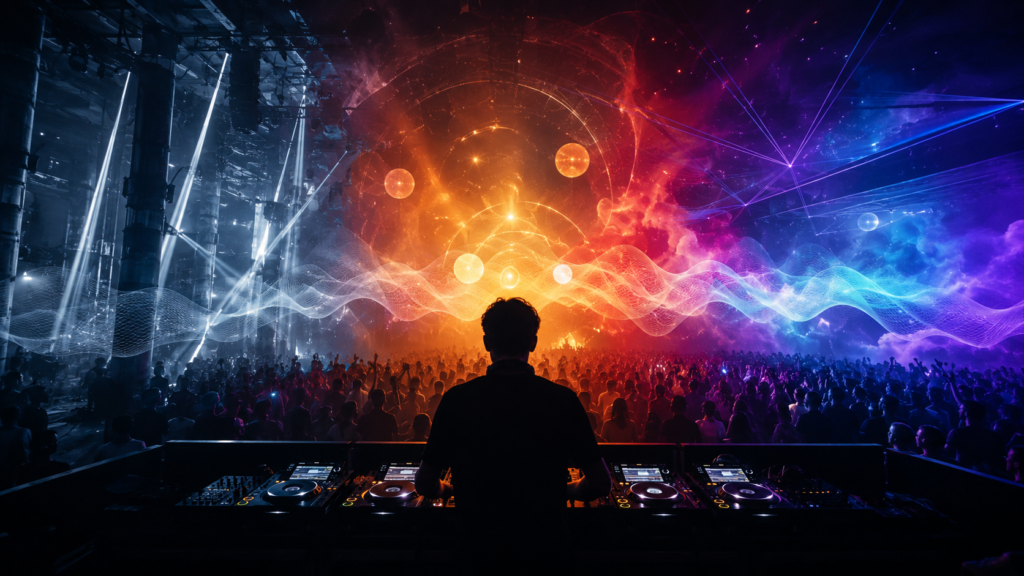
For decades, dance music was built around clear genre identities. House, techno, trance, progressive, minimal, drum & bass — each sound had its own culture, crowd, clubs, labels, and rules.
But today, the lines are becoming harder to define.
A melodic techno set can suddenly move into trance. A house producer can drop afro-inspired rhythms. A techno artist can build emotional breakdowns that feel closer to cinematic music than club music. Festivals are no longer booked around one strict sound, and audiences are often following moments, energy, and identity more than genre labels.
So the question is no longer simple.
From Labels To Playlists
here was a time when electronic music genres were everything. Whether you were a techno purist, a trance enthusiast, or a dedicated house music fan, the label attached to an artist often determined whether you would even give their music a chance. Genres helped define scenes, communities, clubs, and festivals. They gave fans a sense of identity and allowed artists to build loyal followings around a specific sound.
Fast forward to 2026, and the landscape looks very different.
Open almost any streaming playlist, festival lineup, or DJ set recording and you’ll notice the lines between genres becoming increasingly blurred. Artists who were once known for a specific style are now moving freely between melodic techno, progressive house, indie dance, afro house, techno, and even elements of trance. What would have once been considered a dramatic shift in direction is now becoming the norm.
For a new generation of listeners, discovering music is less about genre and more about mood, energy, and experience. Instead of searching for a particular style, many fans simply want music that fits the moment.
The Rise Of Genre-Bending Artists
Some of the biggest names in electronic music today have built their success by refusing to stay inside a single category.
Artists like ARTBAT, Mind Against, Innellea, CamelPhat, and Massano regularly incorporate sounds from multiple genres within the same performance. A set might begin with deep melodic grooves, transition into driving techno, introduce progressive elements, and finish with euphoric trance-inspired moments.
Even festival programming reflects this shift. Events that were once dedicated to a single style now feature a broader range of sounds designed to attract diverse audiences. The modern dancefloor is no longer divided by strict genre boundaries. Instead, it has become a space where different influences coexist and evolve together.
For DJs, this creative freedom allows for more dynamic storytelling. Rather than feeling restricted by expectations, artists can focus on creating emotional journeys that connect with audiences regardless of genre definitions.
Why Genres Still Matter
Despite these changes, genres are far from irrelevant.
They continue to play an important role in helping fans discover music, understand artistic influences, and navigate an increasingly crowded industry. Genres provide a framework that allows listeners to explore new artists and connect with communities built around shared musical tastes.
For emerging producers, genre labels also remain valuable. Being associated with a recognizable sound can help artists find their audience and establish a clear identity during the early stages of their careers.
Genres may no longer dictate every aspect of electronic music culture, but they still serve as useful reference points. They help organize an ever-expanding musical landscape and preserve the history of the movements that shaped dance music in the first place.
The Future Is About Identity, Not Categories
Perhaps the biggest change is that listeners are becoming more interested in artistic identity than genre classification.
Fans increasingly follow artists because of their vision, creativity, and ability to deliver memorable experiences rather than because they fit neatly into a specific category. A great record can resonate whether it is labeled techno, house, progressive, or something entirely new.
Dance music has always evolved through experimentation. Many of today’s most influential sounds emerged when artists challenged conventions and ignored existing boundaries. In that sense, the current blending of genres is not a departure from dance music’s roots—it is a continuation of them.
So, does genre still matter in dance music?
The answer is yes—but not in the way it once did.
Genres remain important as guides and points of reference, but they are no longer the rules that define the dancefloor. In 2026, what matters most is not the label attached to the music, but the connection it creates when the music finally hits the speakers.
Related reading: Melodic Techno vs Melodic House: Similar yet so different.